
The difference between making hot sauce and building a hot sauce company is considerably larger than we expected.
When we started Three Little Peppers Sauce Co. in Grants Pass, Oregon, we had years of experience growing peppers, developing sauces people enjoyed, and learning the business side.
What we didn’t fully appreciate was the amount of science, documentation, and regulation between a recipe in our kitchen and a commercially produced bottle on a store shelf.
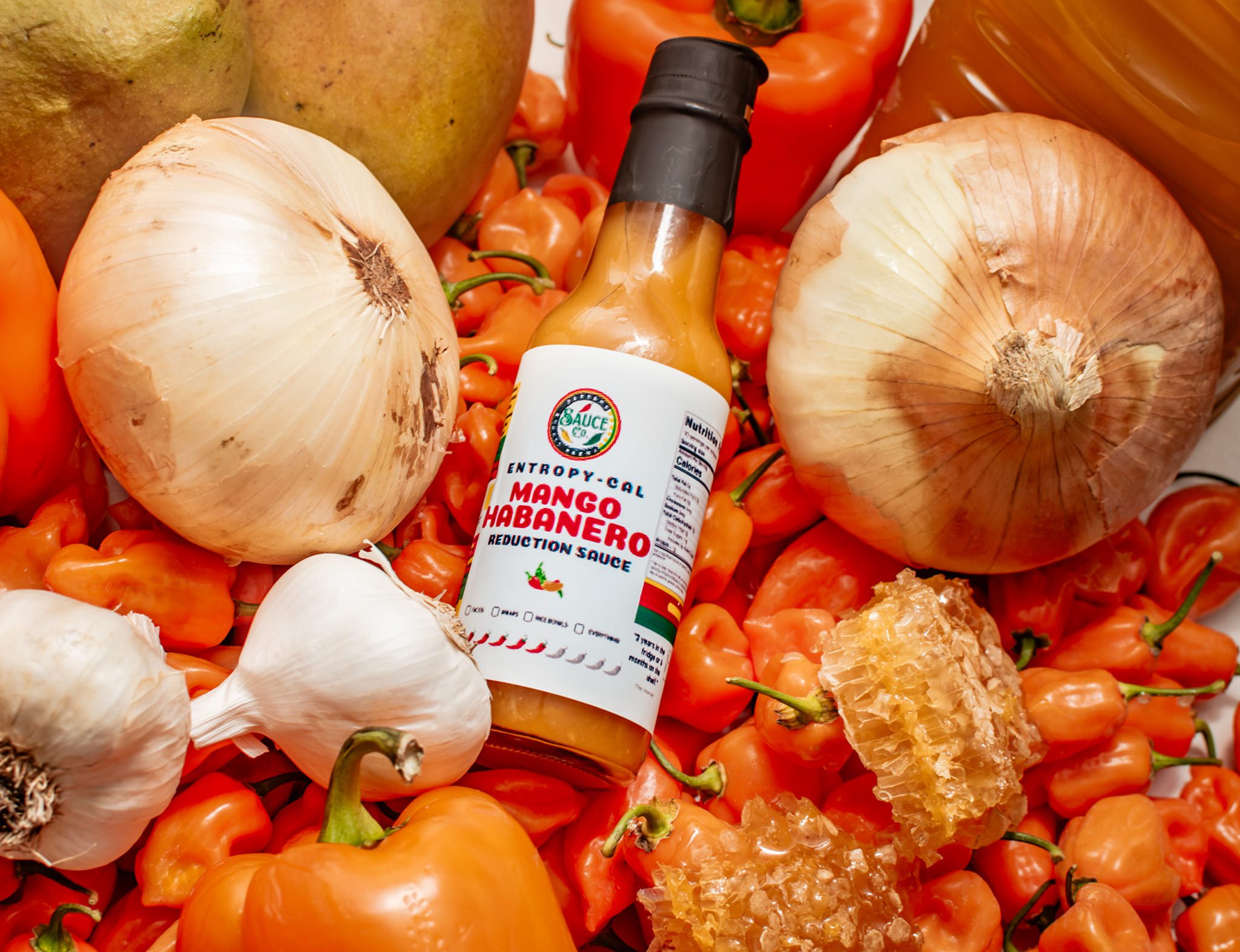
Our first major milestone came on March 10, 2026, when we received our process-authority letter for Mango Jammin, our mango habanero hot sauce.
It was an exciting day, but it wasn’t the finish line.
It Started With a Free OSU Extension Workshop
Before the process-authority letter, one of our most helpful discoveries was a free workshop advertised in the local newspaper. It was offered by Oregon State University Extension Service, and it offered practical guidance for our next steps.
That turned out to be time well spent.
OSU Extension provided spreadsheets that helped us turn Mango Jammin from a kitchen recipe into a documented formulation. Those tools helped us organize ingredients and quantities in a format we could work with as we prepared for professional food-safety review. That might sound like a small thing, but it was a huge step toward treating this as a repeatable commercial product instead of just another kitchen experiment.
We want to give OSU Extension a huge shoutout for that. Rich found a free workshop in the paper, showed up, and walked away with practical resources that made a real difference to our small business. No sales pitch, no expensive consulting package. Just useful education and people willing to help.
Those spreadsheets weren’t a food-safety approval, of course. They helped us document the formulation; the separate process evaluation was the next step. But without that support, getting the recipe ready for review would have been much harder.
If you’re trying to turn something you grow or make into a business, pay attention to the free workshops happening in your community. That one was worth more to our small business than we expected.
Meet Dr. Mark Daeschel
Our process was evaluated by Dr. Mark A. Daeschel, Ph.D., CFS, of Food Safety Assessments LLC.
Dr. Daeschel is a Professor Emeritus in Food Science and Technology at Oregon State University. His professional background includes food microbiology, preservation, fermentation, and food safety.
He has the technical expertise to evaluate the safety of particular commercial food-processing methods and establish the conditions necessary for safe processing.
You can learn more about his work through his official Oregon State University profile.
Having someone with that background evaluate our process was significant. It took the conversation from what we thought would work to what could be supported by food-safety science.
A Good Recipe Isn’t Enough
Mango Jammin combines habanero peppers, mango, vegetables, vinegar, honey, and other ingredients.
The flavor was only one consideration.
Because the product contains ingredients that require acidification for safe shelf-stable processing, it falls under the regulatory framework for acidified foods.
Dr. Daeschel reviewed our formulation and evaluated product samples. The sample recorded in our letter had an equilibrium pH of 3.59.
That number matters, but pH by itself isn’t a complete food-safety plan.
Our letter establishes specific conditions for acidity, heating, filling, holding, and verifying the process. For example, the scheduled process requires a finished equilibrium pH no higher than 4.10, along with defined thermal controls. The specific hot-fill-and-hold procedure requires the sealed product’s interior center to remain at or above 163°F for at least three minutes, together with additional container-handling and monitoring requirements.
These requirements are specific to our evaluated product and process. They aren’t instructions someone should copy for a different hot sauce.
And here’s something worth understanding: even a properly evaluated recipe can become a problem if the manufacturer changes ingredients, processing conditions, or packaging without determining whether the approved process still applies.
Consistency isn’t just about making every bottle taste the same. It’s a safety requirement.
The Part Nobody Sees at the Farmers Market
Receiving a process-authority letter does not mean a business is automatically licensed to produce and sell shelf-stable food.
We still have to meet the applicable requirements involving processing education, kitchen approval, equipment, production records, product labeling, and federal filings.
We’ve spent months communicating with the Oregon Department of Agriculture, investigating shared commercial kitchens, reviewing packaging, and working through the documentation necessary to move forward.
That has involved conversations with the Josephine County Farm Collective and the state food-safety inspector.
I completed acidified-food processing training, and we submitted the documentation as part of our production planning.
We also published a breakdown ofthe $400 course I completed, other Oregon-recognized training options, and what the coursework actually covers.
What surprised us most wasn’t necessarily the complexity of any single requirement. It was understanding how all of them fit together.
A process authority evaluates a specific food and manufacturing process. A regulator evaluates whether the business and facility meet applicable requirements. We are responsible for performing and documenting the process correctly.
These are different responsibilities. And they all matter.
Why We’re Talking About It
There are people all over Southern Oregon making excellent food. People with recipes passed down through their families. People who grow incredible produce. People who make things in their kitchens that deserve a larger audience.
But a lot of them don’t know where to start when it comes to commercial production. We didn’t know everything either.
That’s why we’re sharing our progress, including the parts that take longer than expected.
If you’re considering a bottled sauce, salsa, pickle, or similar food product, the Oregon Department of Agriculture’s acidified-food processing guide is a useful starting point.
One Sauce Down. Plenty of Work Ahead.
Mango Jammin is our first process-authority-reviewed recipe. It is not a blanket approval for our other sauces or pepper jellies. Those products must be evaluated according to their own formulations and applicable regulatory requirements.
We’re still building the commercial operation, working through kitchen logistics, and preparing for the next stage.
In the meantime, we’re growing peppers, testing flavors, and sharing what we’re learning.
Because making a great sauce is one accomplishment. Learning how to make it safely, legally, and consistently is what turns it into a business.
Three Little Peppers Sauce Co. | Grants Pass, Oregon
Leave a Reply