
What we took away from a Southern Oregon value-added foods workshop
There is a big difference between making something delicious and building a food business that can make it safely, consistently, and profitably. We have been learning that firsthand as our family develops Three Little Peppers Sauce Co. here in Southern Oregon.
We recently joined other growers and food makers for a workshop on value-added food production. The conversation covered everything from Oregon’s Farm Direct rules and food safety to shared kitchens, packaging, wholesale pricing, and financing. We took pages of notes. This is the practical version, along with the organizations and resources discussed, for anyone else trying to turn a harvest or family recipe into a real product.
These are workshop takeaways, not legal or food-safety approvals. Rules depend on the product, ingredients, process, facility, and sales channel. Check current requirements with the Oregon Department of Agriculture (ODA) and a qualified process authority before manufacturing food for sale.
Business for Hotheads
In this conversation, Rich talks with Corey about his business, Sacred Earth Farms.
1. Start with the right production path
One of the most useful discussions was about the difference between Farm Direct, cottage food, and licensed processing. These are not interchangeable ways to sell the same product.
Oregon’s producer-processed Farm Direct exemption allows qualifying farms to make certain acidic value-added foods without a food-processing license, but it has specific limits. The agricultural producer must grow all principal produce ingredients, the processing must happen at the place where those ingredients were grown, and qualifying producer-processed acidic products share a $50,000 annual sales limit. That is a combined limit, not $50,000 for each sauce or jelly. Permitted additional ingredients and sales routes are restricted, too.
For example, growing your own peppers does not automatically make a salsa Farm Direct-eligible if you buy the other principal vegetables. And using purchased peppers in a sauce is a different question from selling a product made principally from what you grew yourself.
Oregon’s cottage food exemption is a separate program with different eligible products and rules. If neither exemption fits, the answer may be a licensed home or commercial food-processing operation. A shared kitchen is useful infrastructure, but renting one does not automatically approve every recipe a tenant makes.
Start here: ODA’s Farm Direct producer-processed guide (updated July 2025) and its overview of food-license exemptions are linked in the resources below.
2. A safe recipe is a documented process
A recurring message was that a recipe you love is not necessarily a shelf-stable commercial process. For hot sauces, pepper jellies, fermented products, and other acidified foods, the details matter: ingredients, quantities, pH, temperature, fill conditions, packaging, and how the final product is evaluated.
A recognized process authority may need to review the specific formulation and container. Better Process Control School training is valuable, but the course certificate does not approve an individual sauce. A process approved for one recipe does not automatically cover a second flavor, jelly, or different container.
We’ve worked through both steps ourselves. Read how Mango Jammin received its first process-authority letter and what we learned about Better Process Control School and a $400 training option if you’re figuring out where to start.
The workshop also highlighted recordkeeping. Useful batch records include lot codes, ingredient sources and quantities, calibrated pH measurements, processing conditions, deviations, and where the finished product went. Oregon’s Farm Direct acidified-food guidance specifically calls for processing, sales, and calibration records, maintained for three years.
We also discussed freezing, fermentation, dehydration, and what to do with byproducts. Freezing is not a kill step for pathogens. Fermenting or drying something does not automatically make it safe on a shelf. Any new product or process needs its own evaluation.
3. Do not buy equipment before understanding the bottleneck
Commercial food equipment gets expensive quickly. Instead of assuming every producer needs a dedicated freeze dryer, dehydrator, filler, or production line, the workshop pointed us toward the equipment and production space already available in our region.
Josephine County Farm Collective’s Harvest Community Kitchen in Grants Pass offers shared-use commercial space, and JCFC also has an equipment lending library. The conversation included interest in heated, stirring bottling equipment; that specialized machine was not reported as available in the library at the time. It is the sort of gap worth discussing together before several small businesses purchase equipment independently.
Co-packing came up, too. A co-packer produces a product for another brand, but you still need clear specifications, quality controls, pricing, responsibilities, and traceability. Participants described limited nearby co-packing options. A regional contact list was discussed, but we have not received a verified list to publish here.
4. Learn what customers will buy again
A good market day tells you people are curious. Repeat orders tell you something more useful. The workshop emphasized getting real product feedback early, measuring what sells by location, and resisting the urge to launch too many products at once.
For us, that means testing flavors in the kitchen, tracking what people actually say, and using our HeatMapped flavor-preference work alongside tastings. We want to know which heat levels, textures, and flavor combinations people will come back for, not just which label gets attention.
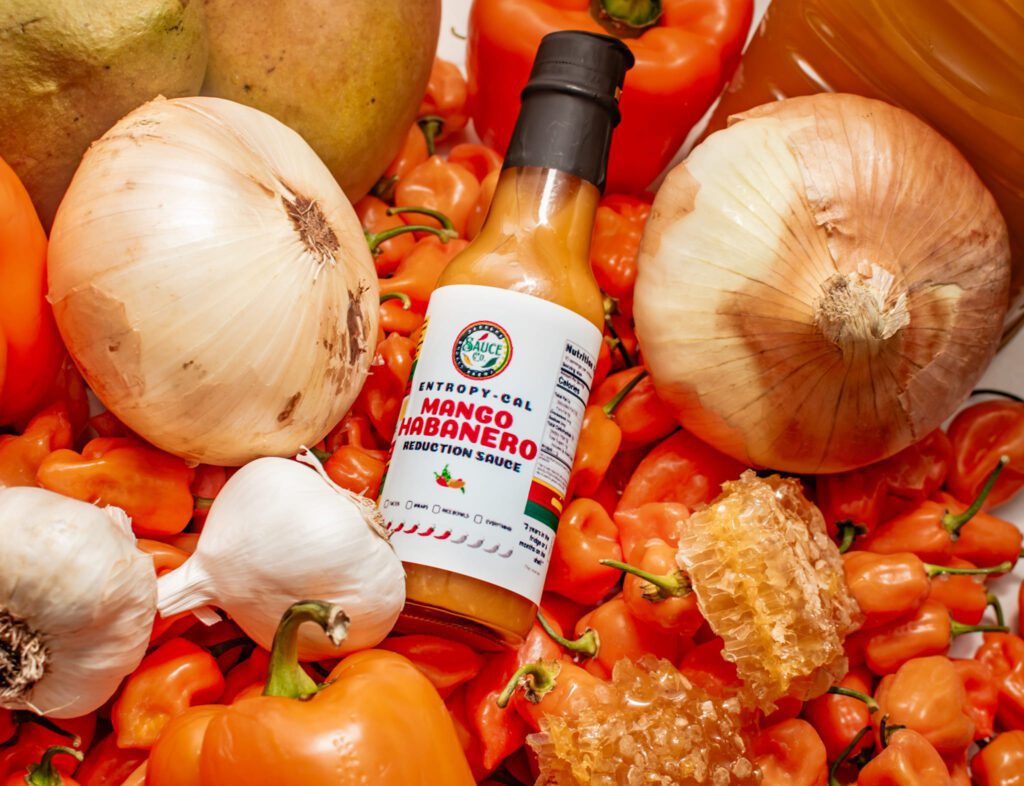
The same goes for reducing waste. Turning an excess harvest into sauce, jelly, or seasoning can create more value, but only if the process is safe, the product has a customer, and the real production costs make sense. Even dried pepper solids from a sauce batch would need a separate safety and labeling review before becoming a saleable seasoning.
5. Wholesale pricing is a different math problem
The pricing conversation was one of the most important parts of the day. It is easy to calculate peppers, sugar, vinegar, and bottles, then call the difference profit. That leaves out much of the actual cost of doing business.
A realistic per-unit cost includes ingredients (even produce you grow), containers, caps, seals, labels, kitchen rental, utilities, testing, labor including your own, loss or spoilage, card fees, freight, insurance, and promotion. Direct sales at a market are not the same as selling to a store that needs its own margin. Add a distributor, and the economics change again.
Another useful distinction: markup and gross margin are not the same number. Build pricing around the net price you will actually receive in each channel. Account for minimum orders, inventory sitting on a shelf, and possible payment terms. More stores do not help if every additional bottle costs you money.
The workshop pointed food businesses toward financial planning and capital-readiness education, including Business Impact NW’s online courses. We have linked their current course library below.
6. Use the people and programs that already exist
One encouraging part of the workshop was hearing how much support is already nearby, even when it is scattered across different organizations. Chris Jagger described connecting producers with specialized business assistance through regional food and agriculture networks. The discussion also pointed to OSU Extension, the OSU Food Innovation Center, and free one-on-one advising opportunities.
The workshop described a technical-assistance opportunity under the name “Accelerate Women” and suggested that the particular funding window could run only through December 2026. We have not confirmed the program’s intake URL or current availability, so ask the workshop organizers or your Regional Food & Agriculture Business Center contact for the specific referral rather than relying on a look-alike website.
The big lesson for us was not to try to solve every regulatory, equipment, packaging, and sales problem alone. Other producers may be working through the same issues, and a local referral can save weeks of guesswork.
How wholesale pricing changes the shelf price
One of the most useful examples in the Oregon Department of Agriculture workshop slides was how several margins affect the final store price. A $3 manufacturing cost can become a $12.50 shelf price without anyone arbitrarily multiplying the price by four. Each stage has its own costs and margin requirements.
| Component | Amount | Share |
|---|---|---|
| Manufacturing cost | $3.00 | 24% |
| Manufacturer gross margin | $3.00 | 24% |
| Distributor gross margin | $1.50 | 12% |
| Retailer gross margin | $5.00 | 40% |
Source: Value Added into Wholesale, workshop slide 49. Assumes a manufacturer selling price of $6.00 (50% gross margin on the $3 cost), a distributor gross margin of 20%, and a retailer gross margin of 40%. Illustrative only, not Three Little Peppers pricing. Gross margins are not take-home profit; freight, promotions, spoilage, overhead, and other costs may still apply.
For a producer, the lesson is to calculate your actual cost per bottle and work backward from a realistic shelf price before promising a store or distributor a wholesale rate. Food Methods offers a cost-margin-price calculator for testing the numbers.
Oregon and Southern Oregon food-business resources
The workshop named the organizations and programs below. We added their official resource pages so readers have useful starting points. These links are provided for convenience and should not be taken as a claim that every URL was read aloud or handed out during the session.
Shared kitchens, equipment, and local connections
Josephine County Farm Collective
shared Harvest Community Kitchen, producer services, farmstand, and marketplace.
JCFC Equipment Lending Library
available agricultural and food-processing equipment, terms, and reservation requests.
Rogue Valley Food System Network
local producer connections, food system planning, and the Rogue Flavor Guide.
ODA Regional Food & Agriculture Business Centers
coordinated local business and technical-assistance referrals.
Food-safety rules and product development
ODA Farm Direct Marketing for Producer-Processed Products (July 2025)
the eligibility, processing, labeling, records, and sales-limit guide.
What Can I Do Without a License? Compare Farm Direct and cottage-food exemptions.
ODA Acidified Foods Step-by-Step Guide
a starting point for understanding commercial acidified-food requirements.
OSU Extension Master Food Preserver Program
tested home-preservation information and the Food Safety and Preservation Helpline at 800-354-7319. This is an educational resource, not commercial process approval.
product and process development, shelf-life studies, sensory research, food safety, and packaging assistance.
Business planning and labeling
on-demand classes, including food-and-farm, financial planning, and access-to-capital topics.
FDA Small Business Nutrition Labeling Exemption
check whether a particular business/product may qualify and whether a notice is required.
requirements and restrictions for organic claims on finished products.
Wholesale tools and practical next steps
The workshop slides also covered the work that begins after a recipe is approved: case-pack sizes, shelf-life testing, barcode registration, buyer sales sheets, and the cash tied up between delivery and payment. A buyer sheet typically includes a product photo, ingredients, package size, shelf life, UPC or GTIN if applicable, suggested retail price, and ordering contact. Confirm the buyer’s requirements before ordering printed packaging or committing to a case size.
Oregon Food & Beverage Maker’s Roadmap
State of Oregon navigation for food makers, including business planning, operations, marketing, financing, and regulatory support.
How to license a product identifier and create a retail barcode. Different retail product variations and package sizes may require different identifiers.
ReciPal: Nutrition Labels and Recipe Costing
A commercial tool for building nutrition panels, ingredient statements, allergen information, and cost estimates. Check current pricing and have final labels reviewed for applicable requirements.
AURI Contract Manufacturing Toolkit
Questions and considerations for co-packing relationships, especially ownership of recipes, specifications, production changes, and quality responsibilities.
Processors’ Food Safety Toolkit
University-supported guidance for small food processors on good manufacturing practices, preventive controls, allergens, and food safety planning. Determine which rules apply to your operation.
What we are taking back to Three Little Peppers
We are keeping the priorities simple: document recipes accurately, work through the right approvals for each product, test with real customers, understand the real cost of each bottle, and build relationships with growers and food makers here in Southern Oregon. We are also paying closer attention to where shared equipment and cooperative sourcing could make small businesses stronger.
If you are growing something you would love to turn into a value-added food, start with the resources above and talk to the people who know the rules. There is a lot to learn, but there is also a community here willing to help.
For a look at the flavors we are testing and the preferences we are collecting, visit our Flavor Lab and HeatMapped survey at 3LP Flavor Lab.
Grow with us!
Interested in joining the Josephine County Master Gardener program? Contact Stephanie Garcia, OSU Josephine County Extension Master Gardener Coordinator, at [email protected] for application instructions, upcoming training dates, fees and volunteer requirements.
Explore the Josephine County Master Gardener program. Enrollment is coordinated through OSU Extension.
Help build Southern Oregon’s food-maker community
This was not just a room full of people taking notes. It was a reminder that growers, food makers, educators and local organizations can make more progress by talking to one another. If you have a farm, a recipe, a processing challenge or a piece of equipment you could share, there is room for you in that conversation.
Looking for a practical next step? Explore Josephine County Farm Collective’s producer program, connect with the Rogue Valley Food System Network, or ask the Regional Food & Agriculture Business Centers to point you toward support. If you want to trade notes with our family about peppers, sourcing or building a food business, reach out to Three Little Peppers. We would love to meet more of the people growing and making food around here.
Explore JCFC producer membership →
Connect with the Rogue Valley Food System Network →
Get in touch with Three Little Peppers →
Note: This article reflects a workshop discussion and official resource pages checked in October 2026. Program availability, eligibility, fees, and regulations can change. ODA and qualified process authorities make the applicable food-safety determinations.
Leave a Reply